Date: Mon, 1 Jun 2015 13:53:33 +0100
Just as an update: the differences in the simulated and experimental 15N
lineshapes were due to slow proton exchange between urea NH2s and H2O in
DMSO. Attached two files show that including intermolecular exchange
into iterative fittings lead to a better fit. As expected, the exchange
effect is more pronounced on the lower field instrument, 400 vs 600 MHz
in this case.
Abil
On 23/05/2015 04:20, Abil Aliev wrote:
> Hello Matthias,
>
> Please see attached.
>
> Experimental spectra are from our 400 MHz with a H-N-C-P QNP probe,
> measured at 25 C using zg30. From what I have seen, the 15N spectrum
> is better resolved than the one used in your fittings. It has also
> better SNR which is important for lineshape fittings. Worth mentioning
> that the 15N{1H} showed a very sharp singlet, with a linewidth of 0.12
> Hz at half-height.
>
> I used gNMR for simulations and iterative full line shape fittings. 1H
> and 15N spectra were fitted simultaneously using the same set of
> parameters and variables. The 1H spectrum is fited fine. In the 15N
> spectrum there are differences in intensities while peak positions
> are reproduced well. This is noticable from the overlapping view in
> the attached where the experimental 15N spectrum is shown in blue
> (experimental 1H in red, both calculated spectra in black).
>
> Making 1Js and 3Js unequal decreases slightly the residual error
> reported by gNMR (from ~4e-7 to ~3e-7), but with not much change in
> the appearance of the calculated 15N spectrum or in the values of J
> couplings (3Js 1.57 and 1.83 Hz and 1Js 86.92 and 86.67 Hz after
> iterative fittings). Changing the sign of the 2J(N,N) requires the
> change of sign for 4J(H,H), but again the fitted lineshape does not
> change much. Since DFT calculations say that the sign of 2J(N,N) is
> positive, I have kept it positive in the attached.
>
> There was a possibility of making the spin system less symmetric
> (pairs of "equatorial" and "axial" protons relative to the C=O bond)
> so that 2J between protons comes into play, but a 1996 JACS paper
> (118, p 8891) suggests that the rotation about the N-C(O) bonds is
> fast at room temperature as the coalescence temperature is 229 K in
> DMF/DMSO. I did try something similar to AA'A''A'''XX' before I saw
> this paper, but even then the fitted lineshapes were very similar to
> those shown in the attached.
>
> Will try to get a copy of PERCH and see if that makes any difference
> in fitting the 15N lineshape.
>
> I guess this thread is too interesting to let it go.
>
> All the best,
> Abil
>
> On 21/05/2015 09:00, Matthias Niemitz wrote:
>> Hello Weixing,
>>
>> Thank you very much for your summary! Just one additional comment.
>> The spectral parameters obtained by PERCH are the results of an
>> computational optimization of rather approximate starting values
>> using an iterative quantum mechanical algorithm based on a
>> total-line-shape fitting.
>>
>> All the best,
>>
>> Matthias
>>
>> From: "Zhang, Weixing" <Weixing.Zhang_at_STJUDE.ORG>
>> To: "ammrl_at_ammrl.org" <ammrl_at_ammrl.org>
>> Subject: RE: AMMRL: 15N and 1H spectra of 15N-labeled urea in DMSO
>> Date sent: Tue, 19 May 2015 19:58:44 +0000
>>
>>> Hello:
>>> I would like to take this opportunity to thank all people for
>>> answering my question.
>>>
>>> Clemens Anklin
>>> (Clemens.Anklin_at_bruker.com<mailto:Clemens.Anklin_at_bruker.com> ) Xinfeng
>>> Gao (xgao_at_indiana.edu<mailto:xgao_at_indiana.edu> ) Jun Gu
>>> (jungu_at_sas.upenn.edu<mailto:jungu_at_sas.upenn.edu>) Novruz Akhmedov
>>> (Novruz.Akhmedov_at_mail.wvu.edu<mailto:Novruz.Akhmedov_at_mail.wvu.edu>)
>>> Joseph Barchi (barchij_at_mail.nih.gov<mailto:barchij_at_mail.nih.gov> )
>>> Stefan Berger
>>> (stberger_at_rz.uni-leipzig.de<mailto:stberger_at_rz.uni-leipzig.de> ) Alan
>>> Brown (abrown_at_fit.edu<mailto:abrown_at_fit.edu> ) Dan
>>> (holmesd5_at_msu.edu<mailto:holmesd5_at_msu.edu>) Sebastian Kemper
>>> (sebastian.kemper_at_tu-berlin.de<mailto:sebastian.kemper_at_tu-berlin.de> )
>>> Alan Kenwright
>>> (a.m.kenwright_at_durham.ac.uk<mailto:a.m.kenwright_at_durham.ac.uk> ) Ryan
>>> T. McKay (rmckay_at_ualberta.ca<mailto:rmckay_at_ualberta.ca> ) Virginia W.
>>> Miner (gina_at_acornnmr.com<mailto:gina_at_acornnmr.com> ) Tadeusz Molinski
>>> (tmolinski_at_ucsd.edu<mailto:tmolinski_at_ucsd.edu> ) Matthias Niemitz
>>> (niemitz_at_perchsolutions.com<mailto:niemitz_at_perchsolutions.com> ) PERRY
>>> PELLECHIA (PJPELLEC_at_mailbox.sc.edu<mailto:PJPELLEC_at_mailbox.sc.edu> )
>>>
>>>
>>> Urea is an A2A2'XX' spin system with chemical shift but not magnetic
>>> equivalence. The simulated spectra are very similar to the
>>> experimental results using the following coupling constants. 1J(H,N)
>>> 2J(N,N) 3J(H,N) 4J(H,H)
>>> 86.8 5.0 1.8
>>> 1.0 Hz (Novruz G. Akhmedov)
>>> 88 4.6 1.8
>>> 1.0 Hz (Xinfeng Gao) 86.7 4.8
>>> 1.7 1.0 Hz (Matthias Niemitz)
>>>
>>>
>>> Attached are pictures from Matthias Niemitz who did not post them to
>>> AMMRL.
>>>
>>> Simulated spectrum (red) vs. the experimental one (blue) with the
>>> difference (green)
>>>
>>>
>>>
>>> If you have any NMR questions, just ask AMMRL!
>>>
>>>
>>>
>>> Weixing Zhang
>>>
>>>
>>> From: Zhang, Weixing [mailto:Weixing.Zhang_at_STJUDE.ORG]
>>> Sent: Thursday, May 14, 2015 1:53 PM
>>> To: ammrl_at_ammrl.org
>>> Subject: AMMRL: 15N and 1H spectra of 15N-labeled urea in DMSO
>>>
>>>
>>> Hello All:
>>>
>>>
>>>
>>> I recorded 1H and 15N spectra of 15N-labeled urea in DMSO.
>>>
>>> Both 15N-decoupled 1H and 1H-decoupled 15N spectra have single peak.
>>>
>>> Without decoupling, both 1H and 15N spectra show a small splitting of
>>> ~4 Hz (see attached pictures).
>>>
>>> Does anybody have an explanation of the splitting pattern?
>>>
>>>
>>>
>>> Thanks,
>>>
>>> Weixing Zhang
>>>
>>> St. Jude Children´s Research Hospital
>>>
>>> Memphis, TN 38105
>>
>> Matthias Niemitz (Support)
>> PERCH Solutions Ltd. i.L.
>> Puijonkatu 24 B 5
>> FIN-70110 Kuopio, Finland
>> phone: +358(0)465383464
>> email: niemitz_at_perchsolutions.com
>> www: http://www.perchsolutions.com
>>
>> This message (including any attachments) may contain confidential,
>> proprietary, privileged and/or private information. The information
>> is
>> intended to be for the use of the individual or entity designated
>> above.
>> If you are not the intended recipient of this message, please notify
>> the sender immediately, and delete the message and any attachments.
>> Any disclosure, reproduction, distribution or other use of this
>> message
>> or any attachments by an individual or entity other than the intended
>>
>> recipient is prohibited.
>>
>>
>>
>
--
Dr Abil E Aliev
Department of Chemistry, University College London
20 Gordon Street, London WC1H 0AJ
Telephone: +44 (0) 20 7679 4616
E-mail:    A.E.Aliev_at_ucl.ac.uk
http://www.ucl.ac.uk/nmr
http://www.ucl.ac.uk/chemistry/staff/fellows/abil_aliev
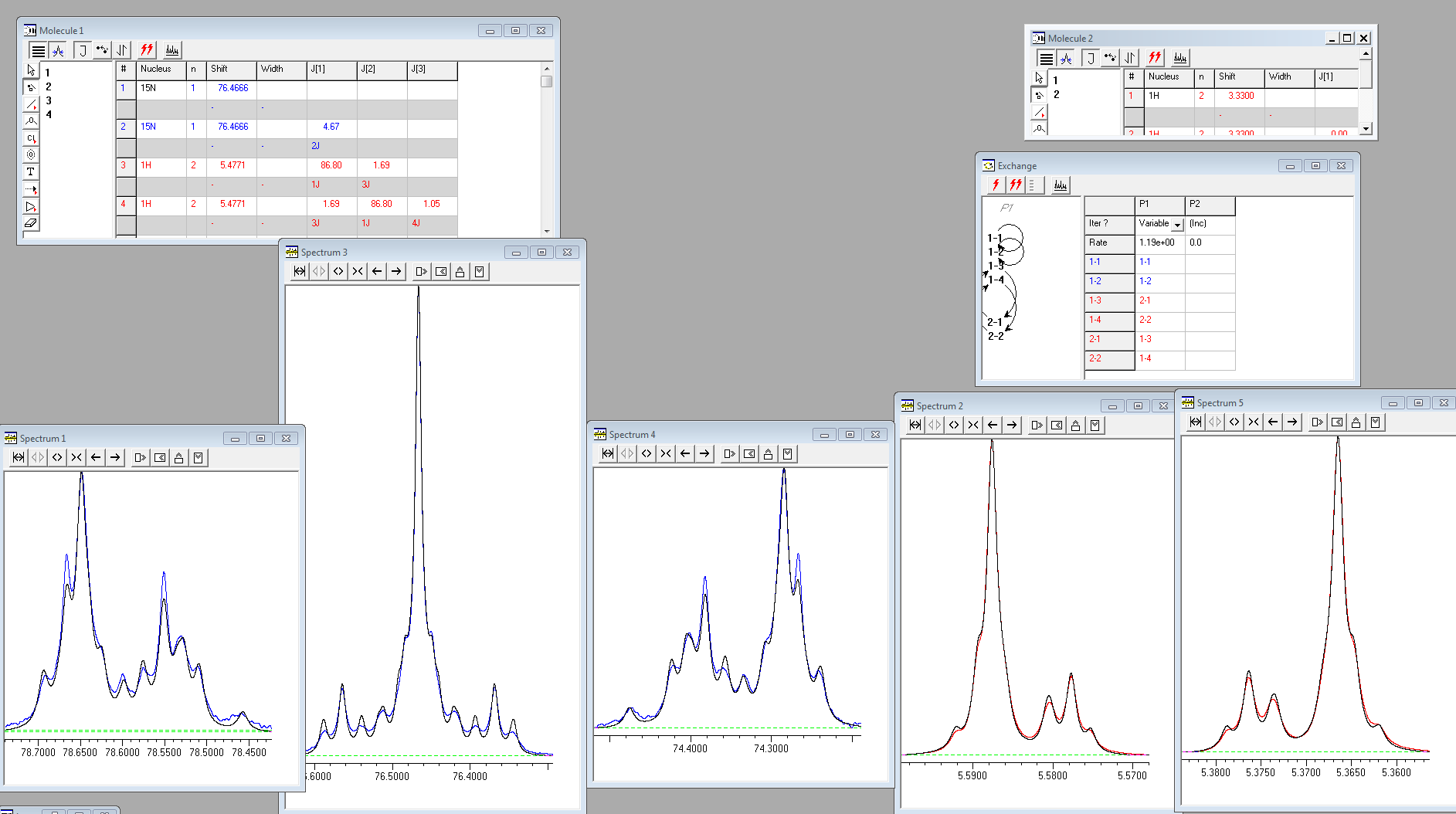
(image/png attachment: With_Exchange_Av400.png)
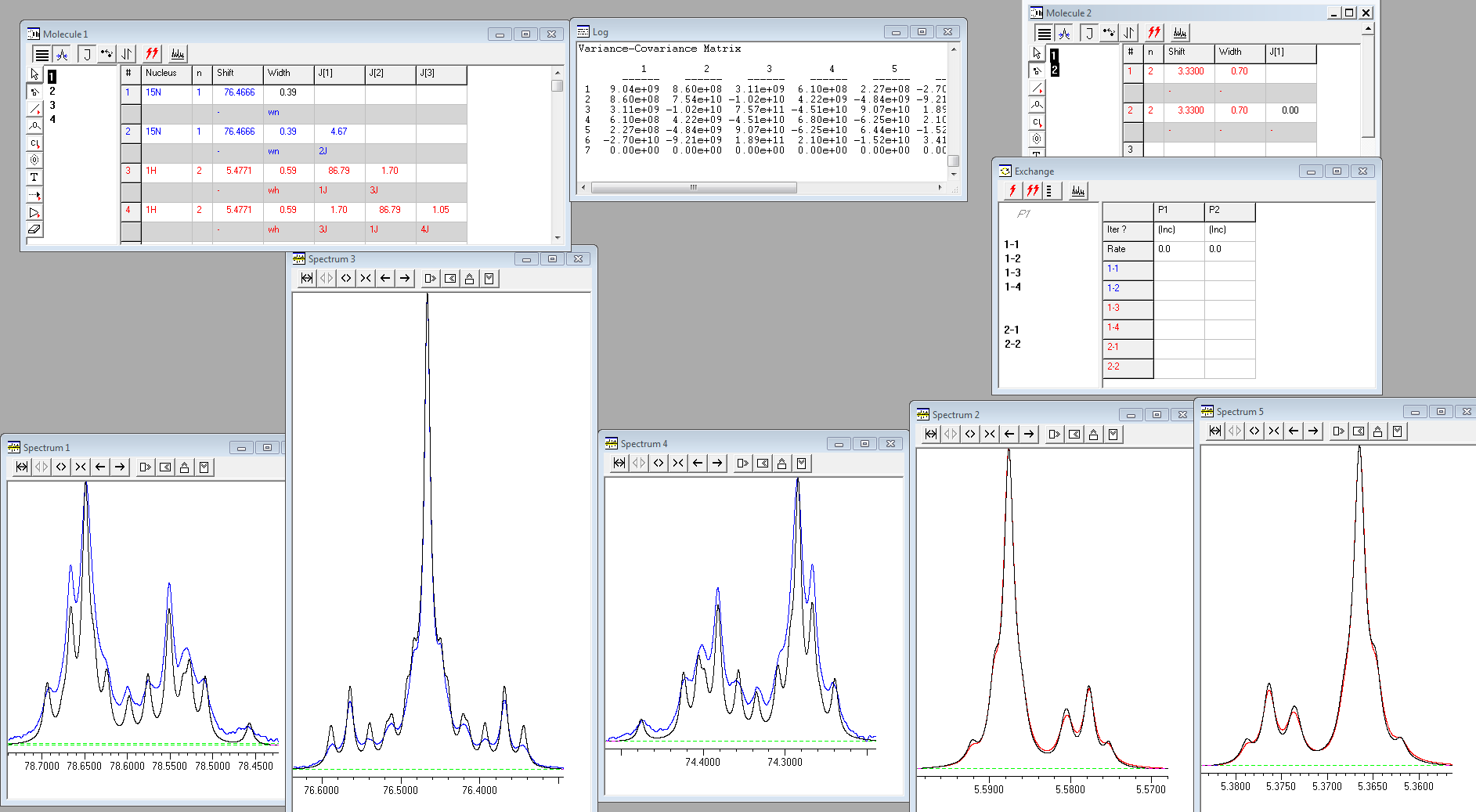
(image/png attachment: No_Exchange_Av400.png)